Why Local Eye Care Is Essential Community Infrastructure
Why Local Eye Care Is Essential Community Infrastructure An Optometrist does more than correct blurred vision. Local eye care creates a practical system for detecting…

A modern Optometrist can do far more than update the numbers on a glasses prescription, especially now that eye care is becoming more personalized, preventive, and connected to everyday technology.
Some of the most useful innovations in vision care are not flashy machines that look impressive in a social media video. They are better ways of evaluating eye health, fitting corrective lenses, managing childhood nearsightedness, and identifying why someone’s eyes never seem comfortable.
These improvements can make a real difference in daily life. Clearer computer vision, better-fitting glasses, more comfortable contacts, and earlier recognition of eye disease are practical upgrades that matter long after the exam ends.
Many people schedule an eye exam only when road signs become blurry or reading starts to feel difficult. Prescription changes are important, but visual clarity is only one part of the visit.
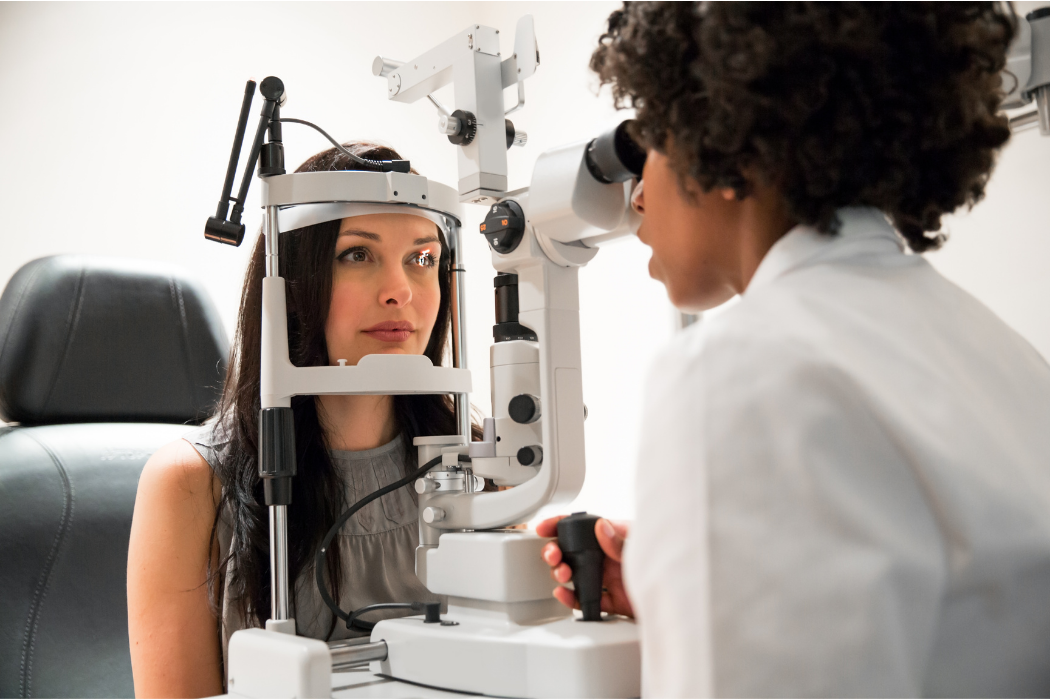
A comprehensive exam can evaluate how the eyes focus and work together while also assessing structures associated with eye health. Depending on the patient’s age, symptoms, medical history, and risk factors, additional testing or dilation may be recommended.
The National Eye Institute explains that many eye diseases can develop without obvious warning signs. A dilated exam allows an eye doctor to examine internal structures and look for changes before a person necessarily notices vision loss.
Think of the exam as a baseline. Comparing findings over time can be more informative than looking at one isolated result. Tell the doctor about new medications, family eye history, diabetes, headaches, flashes, floaters, dryness, and changes in night vision.
The prescription may determine the optical power of the lenses, but it does not determine every detail of the finished glasses. Frame measurements, lens material, optical design, coatings, and final adjustments all influence how the eyewear performs.
A frame that looks great but constantly slides down can place the intended optical center in the wrong position. A poorly selected frame may also feel uncomfortable behind the ears or create pressure on the bridge of the nose.
Custom fitting is particularly useful for multifocal lenses because measurements and frame position can affect how naturally a wearer moves between viewing zones. The most expensive frame is not automatically the best choice. Fit, durability, lens compatibility, and personal style should work together.
Contact lenses should never be treated as generic accessories. They sit directly on the eye and must match the prescription, corneal shape, tear film, visual needs, and wearing habits of the individual.
A contact lens evaluation may include corneal measurements, tear-film assessment, lens movement, visual testing, and a discussion of comfort. Two lenses with similar prescription numbers can feel and perform differently because of their material, diameter, curvature, replacement schedule, and optical design.
Modern options include daily disposables, reusable soft lenses, toric lenses for astigmatism, and multifocal designs for people who need help seeing at more than one distance. Convenience should still be balanced with proper care.
The Centers for Disease Control and Prevention emphasizes that contact lenses must be worn and maintained correctly to reduce the risk of infection. Wearers should follow the prescribed replacement schedule, wash and dry their hands before handling lenses, and avoid sleeping in lenses unless the specific product and eye-care plan permit it.
Soft lenses work well for many people, but they are not the only option. Rigid gas permeable and scleral lenses may be considered for certain higher prescriptions, irregular corneas, or challenging comfort and vision needs.
Scleral lenses are larger than typical corneal lenses and are designed to vault over the central cornea. The fitting process is highly individualized and may require several measurements, evaluations, and adjustments.
This is not a category to shop by online popularity. The right design depends on the eye, and follow-up care helps the doctor evaluate vision, comfort, and the way the lens interacts with the ocular surface.
Water safety is important for every contact lens wearer. The CDC advises keeping contact lenses away from water, including tap water, pools, hot tubs, lakes, and showers. Water is not sterile and can expose the eye to microorganisms capable of causing serious infections.
Traditional glasses make distant objects clearer for a child with myopia, or nearsightedness. Newer management strategies aim to do more by slowing how quickly the condition progresses in appropriate patients.
This represents a major change in the conversation. Instead of simply increasing the prescription whenever vision becomes blurrier, families can ask whether the child may be a candidate for a myopia-management plan.
The FDA’s announcement concerning MiSight 1 day contact lenses describes the first approved soft contact lens indicated to slow myopia progression in children who meet its criteria. Treatment suitability depends on factors such as age, prescription, eye health, maturity, and the ability to follow lens-care instructions.
Parents can support the evaluation by tracking:
Myopia management requires follow-up because the doctor needs to monitor vision, prescription changes, eye health, and treatment use over time.
Dry eye does not always feel simply “dry.” Symptoms may include burning, fluctuating vision, redness, grittiness, sensitivity to light, tired eyes, or even excessive watering.
There are different contributors to dry eye. Some people do not produce enough tears, while others experience tears that evaporate too quickly. Contact lens wear, medications, environmental conditions, prolonged screen use, eyelid problems, and health conditions may also play a role.
The National Eye Institute notes that treatment depends on the cause and severity of the condition. That is why repeatedly buying a different artificial tear without an evaluation may not provide lasting relief.
A personalized plan might involve changes to screen habits, artificial tears, prescription medication, eyelid care, punctal plugs, or other therapies recommended after an examination. Eye redness and pain should not automatically be assumed to be ordinary dryness, especially when accompanied by light sensitivity or reduced vision.
Digital eye strain is one of the most relatable modern vision complaints. Screens require sustained focusing and can encourage people to blink less often, contributing to tired or uncomfortable eyes.
The American Optometric Association describes digital eye strain as a group of eye and vision problems associated with prolonged use of computers, phones, tablets, and other displays.
Try these practical adjustments:
The commonly recommended 20-20-20 approach involves looking at something about 20 feet away for 20 seconds after roughly 20 minutes of close screen work. It is a simple reminder rather than a substitute for evaluating continuing symptoms.
Innovative lenses and treatments are most useful when someone explains how they apply to an individual. That education-focused approach is part of the experience at Gateway Eye Care, an independent optometry practice in New Hartford, New York.
The practice provides annual, pediatric, contact lens, and diabetic eye exams, along with care for eye emergencies, glaucoma, cataracts, macular degeneration, dry eye, and myopia. Its optical services include custom-fit eyewear, standard contact lenses, and specialty options such as scleral and rigid gas permeable lenses.
Patients should confirm which examination or service fits their needs when scheduling. A routine vision visit may not be appropriate for sudden symptoms or a complex contact lens concern.
Some changes should not wait for the next routine exam. Sudden vision loss, a curtain-like shadow, new flashes or a large increase in floaters, severe eye pain, chemical exposure, trauma, or intense redness with light sensitivity may require urgent assessment.
People with diabetes should also make regular eye care part of their health plan. The National Eye Institute explains that diabetic retinopathy may have no symptoms in its early stages, which is one reason comprehensive dilated exams are important.
The best eye-care innovation is not technology for its own sake. It is the ability to turn detailed information into clearer vision, greater comfort, and a plan that protects sight over time. When exams, lenses, daily habits, and follow-up care work together, modern vision care becomes a practical upgrade for the whole family.