
Med Spa in Savannah, GA: The Value of a Personal Plan
Choosing a med spa in Savannah, GA involves more than comparing treatment menus; it means evaluating how a practice turns your goals into an appropriate,…

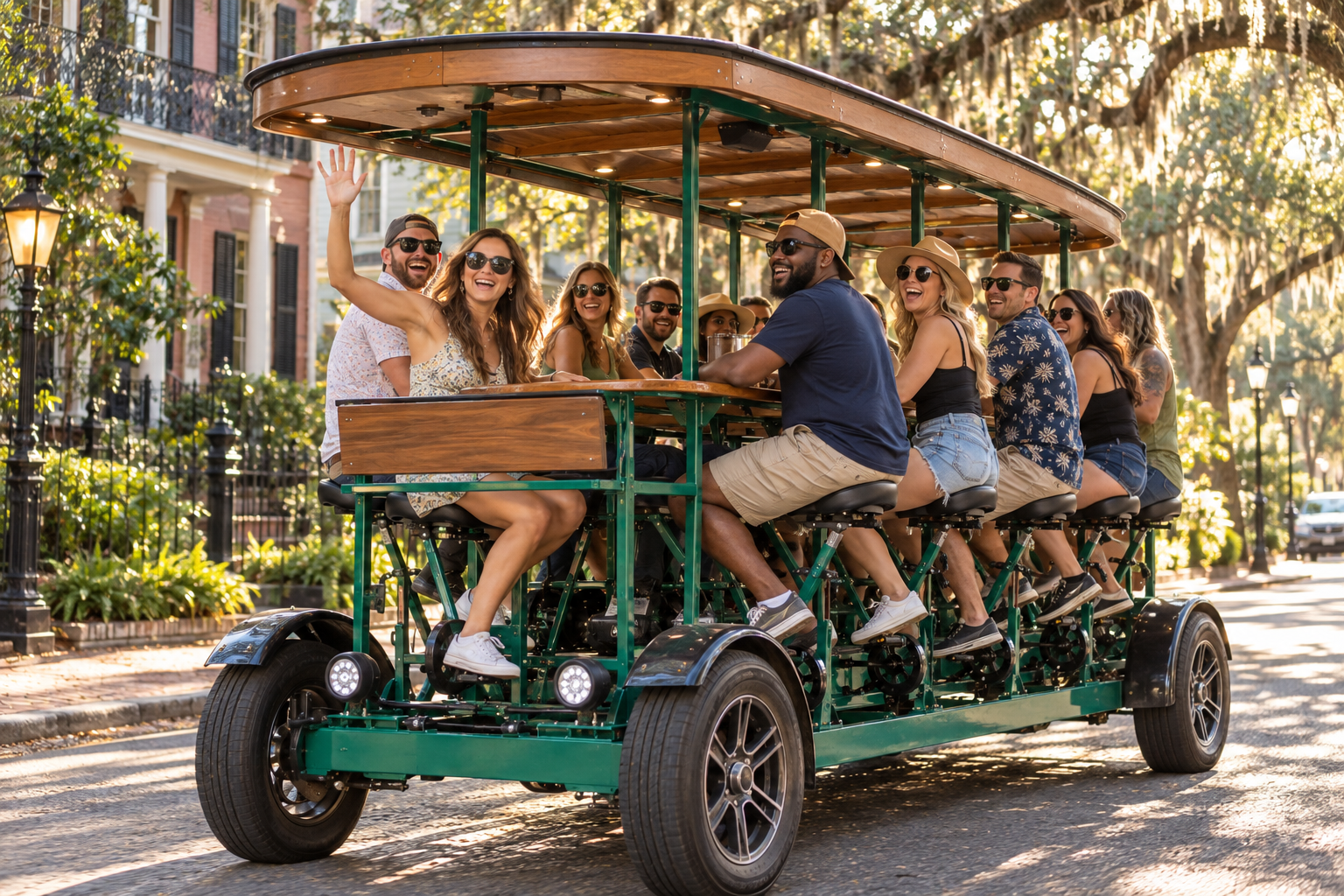
A Savannah pedal tour transforms sightseeing into a shared experience by combining guided storytelling, group participation, local businesses, and slow-paced transportation.
Traditional city tours usually ask guests to sit and observe. Pedal tours change that relationship. Participants contribute to the movement of the vehicle, interact throughout the route, and experience the city as a group rather than as passengers moving anonymously from one attraction to another.
This model reflects a broader shift in tourism. Travelers increasingly want memorable activities that connect them with a destination, provide opportunities for social interaction, and feel different from experiences available at home.
For local tourism businesses, the pedal-tour format also demonstrates how a simple idea can become an innovative service when transportation, entertainment, history, and hospitality are designed to work together.
A conventional tour primarily sells information and transportation. An experiential tour sells participation.
Guests are not only taken through downtown Savannah. They pedal together, listen to a guide, select music, react to stories, and stop at local destinations. The tour becomes something the group actively creates rather than something delivered entirely by the operator.
This distinction matters because people often remember how an activity made them feel more clearly than they remember every fact shared along the route. Laughter, teamwork, music, and unexpected discoveries can become part of the value.
Savannah Slow Ride has built its model around that principle. Its custom vehicle carries up to 15 riders and operates entirely through pedal power. A trained guide manages the route, allowing guests to focus on the city and their companions.
Downtown Savannah contains details that are easy to miss from inside a fast-moving vehicle. Historic buildings, tree-lined streets, public squares, former commercial spaces, and architectural features all reward closer observation.
The National Park Service explains that Savannah was established in 1733 as a planned city organized around a grid of streets and public squares. Twenty-two of its 24 original squares remain.
A slow-moving tour can help visitors understand how these features relate to one another. Guests experience the distance between locations and see how squares, streets, businesses, and landmarks form a connected urban environment.
This does not mean every visitor wants the same interpretation. Some are interested in documented history, some enjoy ghost stories, and others prefer a social tour centered on local pubs. A flexible tour business can serve those different motivations without changing its core transportation model.
An innovative service does not always require an entirely new product for each audience. Sometimes one platform can support multiple experiences through changes in storytelling, route design, timing, and partnerships.
Savannah Slow Ride uses its pedal-powered vehicle for three primary tour formats:
Each tour lasts approximately two hours, but the reason for booking differs. The pub crawl appeals to adult groups seeking a social outing. The haunted experience serves guests interested in Savannah’s darker stories, while the historical tour provides a more educational introduction to the city.
This product structure gives the business a recognizable identity without limiting it to one narrow audience.
The Slow Ride Pub Crawl brings guests to several locally owned pubs and offers access to drink discounts. This creates value beyond the tour itself.
The operator gains an engaging route with planned stops. Participating pubs receive groups of customers. Visitors discover establishments they might not have selected independently. The destination benefits when tourism spending reaches locally operated businesses.
This type of partnership is especially effective when expectations are clearly managed. Tour groups need enough time to order and return, establishments need to prepare for arrivals, and guides need to maintain the schedule without making the experience feel rushed.
The most useful tourism partnerships are not merely promotional. They improve the guest experience while creating practical benefits for the participating businesses.
The pedal vehicle may attract initial attention, but the guide has a major influence on whether guests remember the tour positively.
A strong guide must perform several roles at once:
These responsibilities combine operational knowledge with hospitality. A guide who understands the city but cannot manage a group may struggle. A highly entertaining guide who shares inaccurate information can damage trust.
Training should therefore cover both content and guest management. For historical tours, accuracy and context are particularly important. For haunted tours, guides should distinguish local legend from documented history when appropriate. Pub-crawl guides must balance entertainment with responsible expectations.
Planning an outing for a large group is often harder than choosing the activity. People arrive at different times, transportation becomes fragmented, and decisions about where to go can consume much of the event.
A pedal tour reduces some of that friction by giving the group:
Savannah Slow Ride tours begin and end at the company’s headquarters at 420 West Bryan Street, near Franklin Square and City Market. Keeping the departure and return point consistent can make transportation planning easier for visitors unfamiliar with downtown Savannah.
Online booking adds another layer of convenience by allowing organizers to review availability and reserve in advance.
Clear age policies help guests choose the correct experience. The Slow Ride Pub Crawl is restricted to adults 21 and older. The Haunted “Boos” Cruise and Historical South Tour are open to all ages Sunday through Thursday but become 21-and-older experiences on Friday and Saturday.
This schedule allows the same tour concepts to serve family and adult audiences at different times. It also makes accurate website information essential. A group booking for several people needs to know the age rule before purchasing tickets and planning transportation.
Businesses operating experience-based services benefit from publishing clear information about:
Clarity before purchase reduces confusion at check-in and helps protect the overall experience.
A multi-passenger pedal vehicle is both a method of transportation and a visible brand asset. As it travels through downtown, it naturally attracts attention. The service can be understood quickly: a group is moving through the city together while participating in the ride.
The City of Savannah identifies walking and bicycling as ways to explore local parks, trails, and corridors. Pedal tours occupy a different category from personal cycling, but they draw on the same appeal of experiencing a place at street level.
Savannah Slow Ride describes its vehicles as locally owned, manufactured, and operated. That local connection supports a stronger identity than a generic attraction imported without reference to the destination.
Standardized tours create operational efficiency, but private groups often want an experience tailored to a celebration or company outing. Savannah Slow Ride invites groups with custom ideas to contact the team about creating a specialized route.
Customization can include changes to music, atmosphere, stops, or the overall tone of the event. However, the strongest custom experiences still operate within practical boundaries. Route safety, business agreements, operating rules, timing, and age restrictions cannot simply be ignored.
A good customization process should establish:
This information helps the operator determine what can realistically be delivered.
Tourism innovation should improve enjoyment without overlooking responsibility. Pedal-tour operators must account for traffic, weather, alcohol use, guest behavior, and the physical needs of participants.
Guests also share responsibility. They should arrive on time, follow guide instructions, stay hydrated, dress for the weather, and avoid participating when a medical or mobility concern makes pedaling unsuitable.
For pub-crawl tours, alcohol should remain optional. Groups should arrange safe transportation after the tour, bring valid identification, and avoid pressuring anyone to drink.
Responsible procedures are not separate from the guest experience. They help the activity run smoothly and make the service more sustainable for the business, its partners, and the surrounding community.
Savannah Slow Ride demonstrates how a tourism business can combine several familiar elements into a distinctive local product. Bicycling, guided tours, pub crawls, historical storytelling, and group entertainment already existed independently. The innovation comes from integrating them into one coordinated experience.
The model succeeds when each component supports the others. The vehicle creates visibility. The guide adds interpretation and personality. Local stops connect visitors with other businesses. Online booking simplifies planning. Multiple tour themes broaden the audience.
For visitors, the result is an alternative to passive sightseeing. For Savannah, it is another way to experience the city’s streets, stories, and locally owned establishments at a pace that encourages interaction.
That is the larger lesson of experience-based tourism: innovation does not always mean moving faster. Sometimes it means designing a better reason to slow down.