Modern eye care in Ashburn, VA is evolving beyond basic vision correction into a more personalized experience shaped by diagnostic technology, specialty services, and long-term eye health strategies. This shift reflects a broader transformation in healthcare: patients increasingly expect their providers to identify individual risks, explain their findings clearly, and recommend solutions that fit their daily lives.
For optometry practices, innovation is not simply about acquiring new equipment. It involves connecting better information with thoughtful clinical judgment. When advanced imaging, comprehensive examinations, specialty contact lenses, dry eye therapies, and myopia management are integrated effectively, patients receive care designed around their specific needs rather than a standardized checklist.
The Eye Exam as a Foundation for Better Decisions
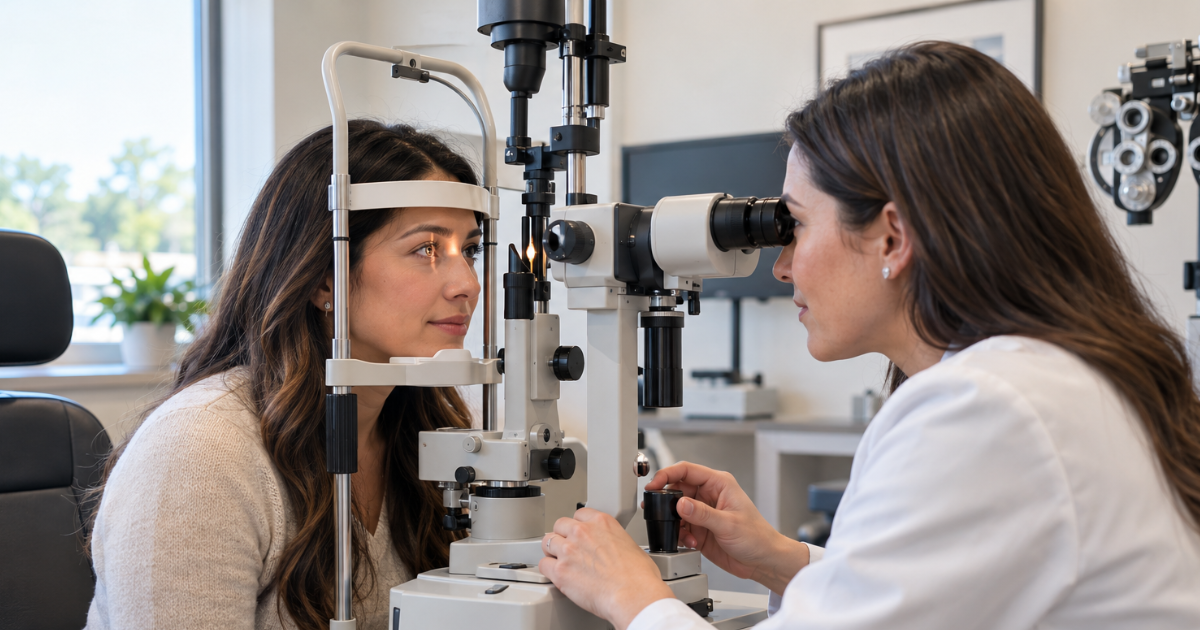
A modern eye examination involves considerably more than reading letters from a chart. Visual acuity remains important, but it is only one part of a broader evaluation. A comprehensive appointment may assess eye coordination, focusing ability, peripheral vision, depth perception, pupil response, eye pressure, and the health of internal eye structures.
The process often begins with a conversation about symptoms, medications, work conditions, screen habits, previous eye problems, and family health history. These details give clinical findings valuable context. Two people with similar prescriptions may have very different concerns if one spends the workday using multiple monitors while the other regularly drives at night.
According to the National Eye Institute, comprehensive dilated examinations can help professionals identify eye diseases that may not produce obvious warning signs during their early stages. This makes routine examinations useful for both clear vision and preventive health monitoring.
Diagnostic Technology Creates a More Complete Picture
Modern diagnostic tools allow optometrists to collect detailed information about structures that cannot be evaluated through visual acuity testing alone. Retinal imaging, optic nerve assessment, eye-pressure measurements, and other forms of diagnostic testing can provide objective records of ocular health.
These records are especially valuable when they are compared over time. A single image captures the condition of an eye on one day, while a series of images can reveal whether certain features are remaining stable or changing. This ability to establish a baseline supports more informed decisions about monitoring, additional testing, and referrals.
Technology can also make appointments more understandable for patients. When findings can be viewed and discussed visually, an optometrist can explain why a particular recommendation matters. The equipment supplies information, but its greatest value emerges through professional interpretation and clear communication.
Specialty Care Replaces the One-Size-Fits-All Model
One of the most significant developments in optometry is the growth of specialty services. Instead of treating every concern as an isolated prescription issue, modern practices can create focused care plans for conditions such as dry eye, progressive childhood myopia, irregular corneas, and difficult contact lens fits.
This approach recognizes that similar symptoms can have different causes. Blurry vision might reflect a changing prescription, an unstable tear film, a focusing problem, or an underlying ocular condition. Discomfort in contact lenses could relate to lens material, fit, wearing habits, allergies, or eyelid health.
A specialty-care model allows the provider to investigate those differences before recommending a solution. It also encourages follow-up, since many eye conditions require adjustments or ongoing observation rather than a single appointment.
Dry Eye Care Is Becoming More Cause-Focused
Dry eye illustrates why personalized evaluation matters. Although the condition is commonly associated with insufficient tears, some patients produce tears that evaporate too quickly. Others may experience symptoms related to eyelid inflammation, oil-gland dysfunction, environmental exposure, medications, or extended screen use.
Artificial tears may provide temporary comfort, but persistent symptoms can justify a more detailed assessment. Contemporary dry eye services may use technologies involving controlled heat, light-based treatment, radiofrequency energy, eyelid cleansing, or gland-focused care. Different tools address different contributing factors, so an evaluation should guide the selection process.
Innovation in this area is valuable because it supports a more structured question: what is disrupting the tear film? That question is more productive than assuming every person with burning, watering, or fluctuating vision needs the same product.
Myopia Management Looks Beyond Today’s Prescription
Traditional glasses and contact lenses correct the blurred distance vision caused by myopia. Myopia management adds another objective: monitoring and potentially slowing progression during childhood, when the eyes are still developing.
The National Eye Institute’s overview of myopia notes that nearsightedness frequently begins between ages 6 and 14. It also explains that higher degrees of myopia are associated with increased risks of other eye conditions later in life.
Depending on a child’s examination results and individual circumstances, management options may include:
- Specially designed soft multifocal contact lenses
- Orthokeratology lenses worn overnight
- Low-dose atropine prescribed under professional supervision
- Specialized spectacle lenses designed for myopia control
No single method is appropriate for every child. Age, prescription, eye health, maturity, family history, lifestyle, and the rate of progression can all influence the recommendation. Regular follow-up is equally important because it allows the optometrist to measure changes and modify the plan when necessary.
Contact Lens Technology Supports Greater Customization
Contact lens care has also become more individualized. Standard soft lenses work well for many people, but they do not solve every visual or comfort challenge. Astigmatism, presbyopia, high prescriptions, dry eye, and irregular corneal shapes may require specialized designs or fitting strategies.
Today’s options can include toric lenses, multifocal lenses, rigid gas-permeable designs, scleral lenses, and orthokeratology. Selecting among them involves more than matching a lens to a glasses prescription. The optometrist may evaluate corneal shape, tear-film quality, lens movement, visual demands, and the patient’s ability to handle and care for the lenses safely.
This is a practical example of healthcare innovation working quietly. The improvement is not simply a newer product; it is the combination of better materials, more precise measurements, and individualized follow-up.
Personalized Eyewear Still Matters
Advances in medical and diagnostic care do not diminish the importance of well-selected eyewear. Frames and lenses influence comfort, clarity, appearance, and everyday performance. Lens recommendations may differ for someone who drives frequently, works at a computer, spends substantial time outdoors, or needs seamless vision across several distances.
Frame fit matters as well. Bridge design, temple length, lens position, and overall proportions can affect both comfort and optical performance. A personalized optical experience connects the prescription with the way the glasses will actually be worn.
The Patient Experience Is Part of Innovation
Clinical technology receives much of the attention, but operational improvements also shape modern care. Online appointment requests, digital forms, organized follow-up systems, and accessible educational resources can reduce friction for patients.
These systems are most useful when they support rather than replace human interaction. Patients still need opportunities to describe symptoms, ask questions, and understand their options. Efficient technology can give the care team more room for those conversations.
What Patients Should Ask About Modern Eye Care
Patients do not need to understand every instrument or treatment before an appointment. A few practical questions can help them participate actively in the process:
- What does this test evaluate?
- Are my results stable compared with previous visits?
- Could my work environment or screen habits be contributing to my symptoms?
- Are specialty lenses appropriate for my visual needs?
- Does my child show signs of progressive myopia?
- Could persistent irritation require a dedicated dry eye evaluation?
- When should I return for monitoring?
Clear answers help patients understand the purpose behind recommendations and make better-informed decisions about their care.
Innovation Works Best When It Remains Personal
The future of optometry is not defined by technology alone. Its real promise lies in using better tools to deliver more relevant care. Diagnostic imaging can reveal important details, but a clinician must interpret them. Specialty treatments create more options, but the correct option depends on the patient. Digital systems improve convenience, but trust still develops through attentive communication.
Ashburn Vision Source reflects this direction by bringing comprehensive examinations, medical eye care, dry eye services, myopia management, specialty lenses, and personalized eyewear together within one practice. That integrated model allows routine vision needs and more complex concerns to be considered as parts of the same long-term eye health strategy.
As optometry continues to advance, the most meaningful innovation will remain grounded in a simple goal: helping each patient see comfortably while protecting healthy vision for the years ahead.
This article provides general educational information and is not a substitute for diagnosis or treatment from a qualified eye care professional. Anyone experiencing sudden vision loss, eye pain, flashes, new floaters, or another urgent visual change should seek prompt medical attention.