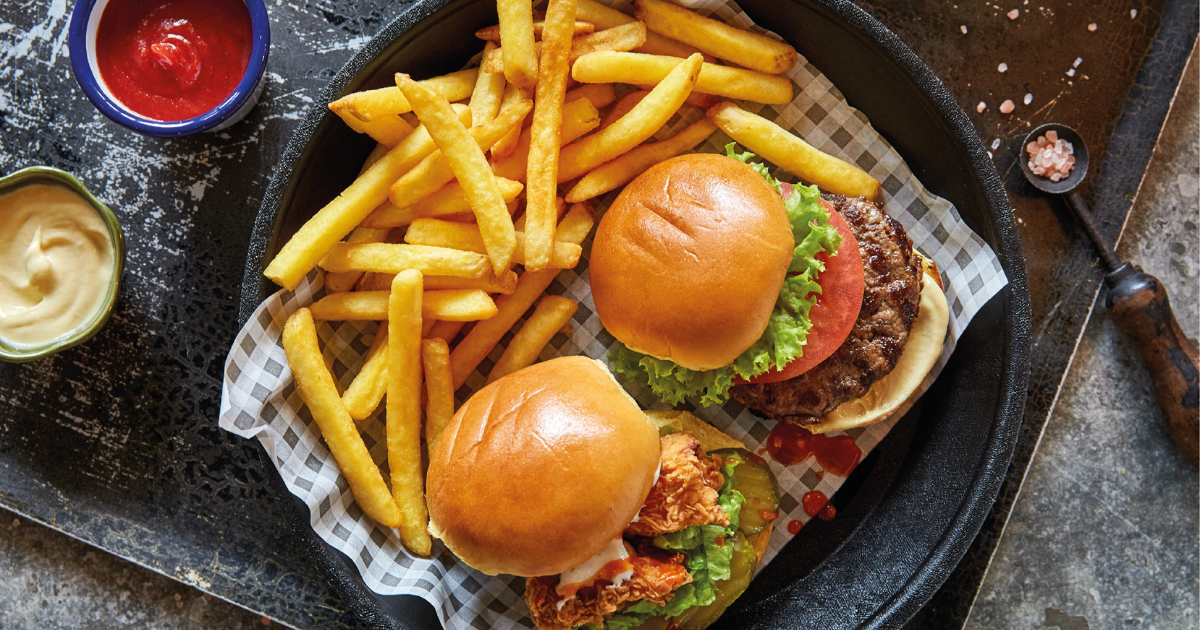
A distinctive slider restaurant in Savannah, GA demonstrates how a focused concept can combine menu creativity, customer choice, local identity, and operational flexibility. Sly’s Sliders and Fries has built its brand around a simple idea: take familiar foods, make them smaller, and give guests the freedom to try more than one flavor in a single meal.
That model reflects an important principle of business innovation. A company does not always need to invent an entirely new product category. Sometimes the stronger opportunity is to rethink how an established product is prepared, presented, ordered, and experienced.
A Clear Concept Makes a Restaurant Memorable
Restaurants compete for attention in an industry filled with burgers, sandwiches, barbecue, and fried food. A clear concept helps a business separate itself from similar options. Sly’s uses “The Mecca of Mini” to communicate its specialty immediately: artisan sliders served in a format designed for mixing and matching.
The strength of the concept comes from its simplicity. Customers do not need a lengthy explanation to understand a slider restaurant. At the same time, the smaller format gives the culinary team room to explore combinations that extend far beyond a basic miniature cheeseburger.
A focused restaurant identity can provide several business advantages:
- Customers can describe the concept easily to friends.
- Signature products become closely associated with the brand.
- Marketing messages remain consistent across multiple channels.
- Menu development can stay creative without losing direction.
- The concept can extend naturally into takeout, delivery, and catering.
Sly’s has used this focus since opening in Savannah in 2014. Its original location in the Starland District serves local residents, students, and visitors looking for an approachable meal with more variety than a single traditional burger offers.
Small Portions Create More Customer Choice
A full-size sandwich usually asks a customer to select one flavor. A slider menu changes the decision. Guests can combine familiar and adventurous choices, building a meal that reflects their individual preferences.
This flexibility makes experimentation feel less risky. Someone may pair a classic beef slider with smoked pulled pork, jerk chicken, falafel, or a mushroom-based option. Because each selection is smaller, trying a new flavor does not require committing the entire meal to it.
From a business perspective, this creates a built-in customization system without requiring guests to redesign every item ingredient by ingredient. The menu provides distinct recipes, while the customer controls the combination.
The experience also gives people a reason to return. A guest who tries three selections during one visit still has other combinations to explore later. Variety becomes part of the restaurant’s repeat-visit strategy rather than an occasional promotion.
Familiar Foods Can Support Culinary Innovation
Successful menu innovation often balances novelty with recognition. If every ingredient and preparation method feels unfamiliar, some customers may hesitate. If every option feels predictable, the restaurant becomes difficult to distinguish.
Sly’s bridges those two needs by using a familiar slider format for a wide range of flavor profiles. Its menu includes beef, smoked pork, brisket, fried chicken, grilled salmon, mushrooms, falafel, and a house-made black bean patty. Various selections incorporate ingredients such as slaw, grilled pineapple, fried capers, pepper jack cheese, sauerkraut, specialty mayonnaise, and regional barbecue sauces.
The National Restaurant Association’s culinary trend analysis has highlighted the demand for bold flavors, comfort, convenience, and value to coexist. It also notes the industry’s interest in smaller or streamlined menus and individual serving formats that balance efficiency with creativity.
The slider model fits naturally within that environment. The bun and serving style provide familiarity, while the fillings create differentiation.
Menu Variety Can Include Different Eating Preferences
Groups rarely agree on one type of food. One person may want beef, another may prefer chicken, and someone else may avoid meat. A varied menu can make a restaurant more practical for families, coworkers, and groups of friends.
Sly’s includes vegetarian and vegan choices alongside its meat and seafood selections. Mushroom, falafel, and black bean options allow plant-focused guests to participate in the same mix-and-match experience rather than ordering from an unrelated secondary menu.
This is an important distinction. Inclusion works best when alternative choices feel connected to the main concept. A thoughtfully developed plant-based slider can contribute to the restaurant’s identity, whereas a generic substitute may feel like an afterthought.
Customers with allergies or strict dietary requirements should still confirm ingredients and preparation practices directly with the restaurant. A menu category alone does not guarantee that an item is appropriate for every medical or dietary need.
Side Dishes Reinforce the Core Brand
A focused concept becomes stronger when supporting menu items complement rather than distract from it. Sly’s pairs its sliders with hand-cut fries, tots, slaw, black beans, salad, sauces, and toppings.
The fries are not merely a required side item. They are included in the restaurant’s name, making them part of the primary brand promise. Toppings such as barbecue pulled pork, chili, bacon, black beans, cheese, garlic sauce, ranch, jalapeño, jerk chicken, and fried egg allow customers to personalize the experience further.
This structure creates a menu that is focused but not restrictive. The restaurant remains centered on sliders and fries while still providing enough combinations for different appetites and repeat visits.
A Restaurant Now Operates Across Multiple Channels
The modern restaurant experience does not begin and end at a dining-room table. Customers may discover a business through local search, review the menu on a phone, order online, collect takeout, request delivery, arrange catering, or reserve space for a private event.
The National Restaurant Association’s off-premises dining research reports that takeout and delivery have become routine parts of consumer life. It identifies speed, customer service, intuitive ordering technology, perceived value, and convenient menu options as important elements of the off-premises experience.
Sly’s supports several customer journeys through dine-in service, online ordering, takeout, delivery options, catering, and private event inquiries. This multi-channel approach helps the same core menu serve different occasions:
- A quick individual lunch
- A family meal at the restaurant
- Food collected on the way home
- Delivery for customers who cannot visit
- A platter for an office meeting
- Food for a birthday or private celebration
The product remains recognizable across those channels, but the packaging, ordering process, portioning, and service requirements change.
Compact Food Formats Suit Off-Premises Dining
Not every restaurant item travels equally well. Foods designed primarily for immediate table presentation may lose texture or become difficult to eat after transportation.
Sliders have useful characteristics for takeout and catering. They are individually portioned, easy to organize in groups, and adaptable to meal bundles. Customers can order several varieties without requiring entirely separate entrées.
Successful off-premises service still depends on operational details. Packaging must protect the food, orders need clear identification, and pickup instructions should be easy to follow. When several slider varieties are ordered together, accurate labeling becomes particularly important.
For restaurant operators, off-premises dining is not simply dine-in food placed inside a container. It is a separate customer experience that requires intentional design.
Local Identity Gives the Concept Context
A restaurant can offer a scalable concept while remaining connected to its original community. Sly’s began in Savannah’s Starland District, an area known for independent businesses and creative energy. The brand’s playful menu names, casual setting, and Southern comfort influences support that local personality.
Local identity matters because customers remember stories as well as products. A business associated with a particular neighborhood or city gains context that a generic concept may lack.
The challenge is maintaining that authenticity while preparing for growth. Sly’s presents franchise opportunities, which means its operating model is intended to travel beyond one location. For expansion to work, the essential experience must be clearly defined: the miniature format, bold recipes, recognizable fries, flexible combinations, and approachable atmosphere.
Private Events and Catering Expand the Business Model
Catering allows a restaurant to reach customers outside its physical dining room. Slider platters can support office lunches, networking events, family gatherings, birthdays, and other celebrations. Mix-and-match ordering is particularly useful for groups because a single platter can include multiple proteins and plant-based selections.
Private event reservations create another use for the restaurant’s space. Instead of serving only individual parties during standard dining periods, the location can become a setting for organized gatherings.
These services diversify how the business generates revenue while keeping the core product unchanged. The restaurant does not need to create an unrelated catering identity; it adapts its signature items for larger groups.
Innovation Does Not Have to Feel Complicated
The Sly’s model offers a useful business lesson: innovation can be understandable. Customers immediately recognize sliders and fries, but the restaurant changes how those foods are experienced through smaller portions, unexpected recipes, extensive mixing and matching, and multiple ordering channels.
The strongest elements work together:
- A concept that is easy to explain
- A signature product with room for creativity
- Choice without unlimited operational complexity
- Vegetarian and vegan options within the main experience
- Service formats for dine-in, takeout, delivery, catering, and events
- A local Savannah story that gives the brand personality
For customers, the result is a meal that can be familiar, adventurous, or a combination of both. For the business, it is a focused platform that supports menu development, repeat visits, group dining, and future growth.
Big ideas do not always require oversized products. Sometimes a smaller format creates more choice, more flexibility, and a more memorable restaurant experience.