How to Choose a Hair Treatment Based on What Your Hair Actually Needs
Customized hair treatments are most useful when they address a clearly identified concern rather than being selected from a list of appealing product claims. Dryness, breakage, dullness, buildup, and scalp discomfort may look related, but they do not necessarily have the same cause or require the same type of care.
Choosing effectively begins with a basic diagnosis of the cosmetic problem. Does the hair need more slip and moisture? Does it feel weak after repeated lightening? Is the scalp oily while the ends remain dry? Is the concern a lack of shine, or are there signs that require evaluation by a dermatologist?
A professional consultation can help separate these issues and match the service to the hair’s current condition, styling routine, and chemical history.
Start by Separating the Scalp From the Hair Fiber
The scalp is living skin containing follicles, oil glands, nerves, and blood vessels. The visible hair shaft is composed of keratinized tissue that has emerged from the follicle. This distinction matters because a product applied to the lengths serves a different purpose from one used on the scalp.
A scalp-focused service may help remove surface buildup, excess oil, or styling residue. A conditioning treatment applied to the hair fiber may improve softness, smoothness, shine, or manageability. One should not automatically be expected to solve the concerns handled by the other.
Before selecting a treatment, consider where the problem appears:
- At the scalp: Oiliness, buildup, mild flaking, tightness, or product residue
- At the mid-lengths: Roughness, tangling, lack of movement, or color-related dryness
- At the ends: Splitting, thinning, brittleness, or excessive knotting
- Throughout the hair: Dullness, poor manageability, or widespread chemical stress
This simple location-based assessment can prevent overconditioning the roots while neglecting damaged ends, or repeatedly treating the lengths when the primary concern is at the scalp.
What Conditioning Treatments Can Realistically Do
Conditioners and masks are designed to improve the surface behavior of hair. They may reduce friction, support detangling, smooth raised cuticle edges, and make the fiber feel softer.
A scientific overview of hair cosmetics and conditioning products explains that conditioners can improve manageability and reduce static through ingredients that interact with the hair surface. Another review of hair structure, degradation, and conditioning agents describes how cosmetic ingredients can help counter some of the physical effects associated with weathered hair.
These improvements are valuable, but expectations should remain realistic. The visible hair fiber is not living tissue, so a treatment does not biologically heal it. Cosmetic services can reinforce, coat, lubricate, or temporarily improve damaged areas, while severely split ends generally need to be removed.
Hydration Is Best for Hair That Feels Dry or Rigid
Hair described as dry may feel rough, stiff, tangled, or difficult to style. This can occur after frequent shampooing, environmental exposure, heat use, chemical processing, or insufficient conditioning.
A moisturizing masque or intensive hydrating service may be appropriate when the goal is to improve softness, flexibility, and manageability. Curly, coily, long, or chemically treated hair often benefits from careful moisture management because natural scalp oils may not travel easily along the entire fiber.
Signs that hydration may be useful include:
- Hair that feels rough after shampooing
- Ends that tangle easily
- A dull or rigid appearance
- Increased static or flyaways
- Curls that lack softness or definition
- Difficulty combing through the lengths
The American Academy of Dermatology recommends conditioning after washing and adjusting product placement to the hair type. Fine or straight hair may need conditioner primarily at the ends, while dry or curly hair may benefit from application through more of the length.
Strengthening Treatments Address a Different Need
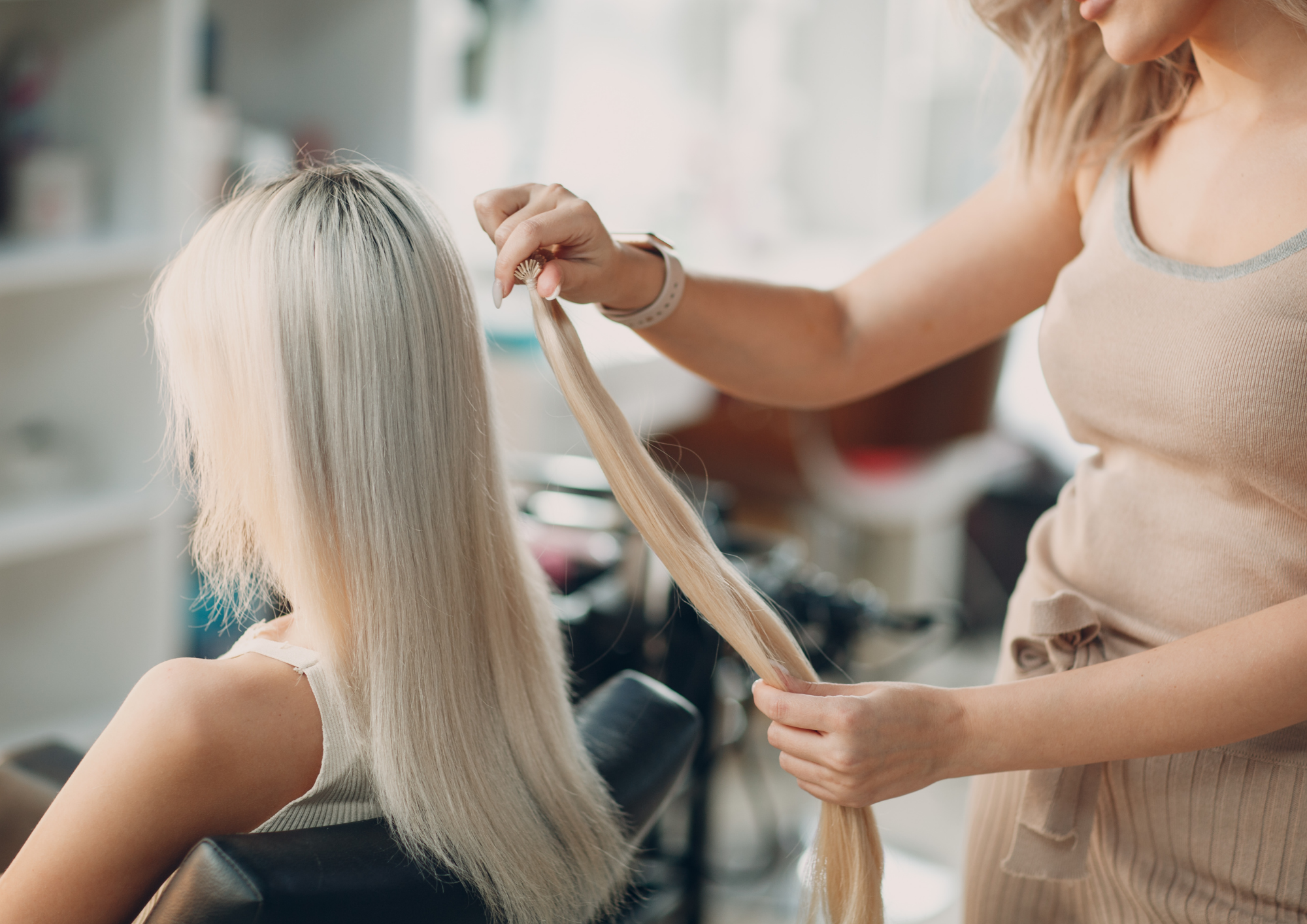
Hair that feels dry is not always structurally weak, and hair that breaks is not always lacking moisture. Repeated lightening, permanent color, chemical texture services, thermal styling, and mechanical handling can compromise the hair fiber.
A strengthening or bond-focused service may be considered when the hair shows:
- Breakage around the crown or hairline
- Loss of elasticity after chemical processing
- Short pieces appearing through the lengths
- Ends that snap during detangling
- A soft, overly stretchy feeling when wet
- Reduced strength after repeated lightening
More treatment is not necessarily better. A stylist should consider the hair’s condition, processing history, texture, and response to previous products. Hair that is primarily dehydrated may still require conditioning and gentler daily handling even if a strengthening service is included.
The AAD’s guidance on preventing further hair damage emphasizes reducing harsh handling, using conditioner, limiting high heat, and increasing the time between chemical services. A salon treatment is most effective when the habits contributing to damage are also addressed.
Glossing Treatments Focus on Surface Appearance
Dull hair may not necessarily be severely damaged. Light reflects more evenly from a smooth, aligned surface, while roughness, mineral buildup, faded color, and raised cuticle edges can reduce visible shine.
A glossing service can be used to refresh tone, enhance surface shine, or give the color a more polished appearance. Clear glosses focus on shine, while pigmented formulas may subtly influence tone.
This category is useful when the primary concern is cosmetic appearance rather than deep conditioning. A guest with soft but faded-looking hair may gain more from a gloss than from repeatedly applying heavy masks. Conversely, highly porous hair may need a broader plan that addresses condition as well as appearance.
Scalp Services Require Careful Boundaries
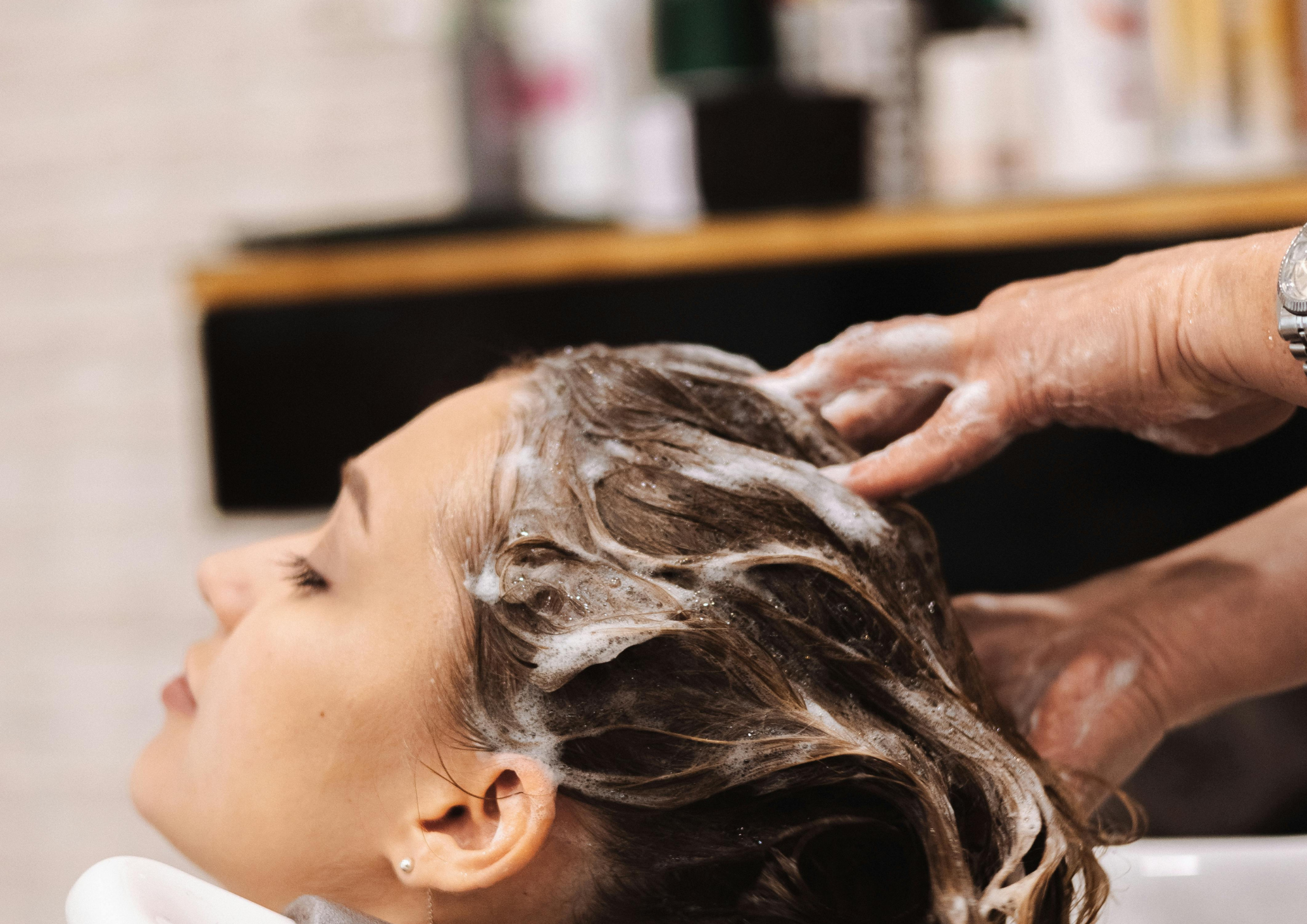
A professional scalp treatment may provide cleansing, exfoliation, massage, and moisturizing benefits. It can be particularly useful when styling products, dry shampoo, oil, or environmental residue has accumulated at the roots.
However, a cosmetic scalp service is not a medical treatment. Persistent itching, thick scaling, bleeding, sores, sudden shedding, or painful inflammation should be assessed by a qualified healthcare professional.
The AAD’s guidance on dandruff and scalp care explains that flaking can have multiple causes, including oily skin, hair-care habits, and medical conditions. If routine care does not provide relief, a dermatologist can determine whether the issue involves seborrheic dermatitis, psoriasis, eczema, an infection, or another condition.
Scalp psoriasis, for example, may resemble dandruff but can involve thicker scale, redness, soreness, or bleeding. The AAD’s overview of scalp psoriasis symptoms illustrates why unexplained or persistent scalp changes should not be self-diagnosed from appearance alone.
Product Claims Should Be Read Carefully
Hair-care language often includes words such as repair, restore, strengthen, nourish, detoxify, or rejuvenate. These terms may describe a visible or sensory benefit, but they do not all have a standardized meaning.
The U.S. Food and Drug Administration distinguishes cosmetic claims from drug claims. Cosmetics are intended to cleanse, beautify, or alter appearance. Products claiming to treat a disease or affect the body’s structure or function may be regulated differently.
Consumers can make more informed choices by asking specific questions:
- What concern is this treatment intended to address?
- Is the result temporary, cumulative, or dependent on home care?
- Will it affect the color or tone of the hair?
- Is it suitable before or after a chemical service?
- Can it be applied to both the scalp and the lengths?
- How often should it be repeated?
Heat and Daily Habits Affect How Long Results Last
A professional treatment may make the hair feel smoother immediately, but its lasting value depends partly on what happens afterward. Frequent high-temperature styling, aggressive brushing, tight hairstyles, and rough towel drying can quickly reintroduce stress.
A study of hair-shaft damage associated with blow-drying found that temperature and distance influence surface damage. At home, keeping the dryer moving, using an appropriate distance, and selecting the lowest effective heat can help reduce unnecessary exposure.
A supportive routine may include:
- Shampooing primarily at the scalp instead of rubbing the lengths.
- Conditioning according to texture and dryness level.
- Detangling gently from the ends upward.
- Using heat protection before thermal styling.
- Reducing repeated passes with flat irons or curling tools.
- Protecting the hair from chlorine and prolonged sun exposure.
- Following the replacement or maintenance schedule recommended by the stylist.
Choosing Between Treatment Categories
A simple decision framework can make the menu easier to understand:
- Choose hydration when the main concerns are dryness, rigidity, tangling, or lack of softness.
- Choose strengthening support when the hair is weakened by chemical processing or shows increased breakage.
- Choose a gloss when the main goal is refreshed tone and improved shine.
- Choose scalp care when the concern involves surface buildup, excess oil, or a need for cosmetic cleansing and exfoliation.
- Seek medical guidance when there is persistent inflammation, unexplained hair loss, sores, bleeding, or severe itching.
Some people may benefit from more than one category, but combining services should be based on compatibility rather than the assumption that additional products always produce a better result.
A Personalized Treatment Menu in Lakewood
Zandi K offers several treatment categories at its Lakewood, Colorado, salon. Its published menu includes Scalp Solutions services, a Scalp Nourishing Restorative, a Strength and Shine Bundle, a Bond-Building and Strengthening Restorative, a Glossing Treatment, a Deep Conditioning Masque, and an Intensive Hydrating Restorative.
The menu separates scalp care, hydration, strengthening, and glossing so the selected service can reflect the guest’s primary concern. Some treatments are available as additions to haircut or color services, while the full Scalp Solutions treatment is offered separately and is not performed on the same day as color.
The salon also uses a product-measurement system intended to calculate the amount of color and product used. From a business perspective, connecting product use to transparent service pricing can help guests understand how customization influences both the process and the cost.
The Right Treatment Begins With the Right Question
Instead of asking which treatment is most intensive, ask which one best matches the current problem. Hair that needs moisture should not be treated as though it only needs shine. A scalp concern should not be addressed solely by coating the ends, and true hair loss should not be treated as a cosmetic styling issue.
The strongest treatment plan combines an accurate assessment, a realistic service goal, and supportive home care. When those elements align, a salon treatment becomes more than a temporary add-on. It becomes a focused part of maintaining hair that is easier to manage, style, and protect.